About
Four disciplines shaped how I understand people and organisations.
I trained as an engineer, then an economist, then a psychologist, and finally as a management researcher. None of that was a plan. It has turned out to be the most useful thing about the way I work.
Most people problems arrive dressed as something else: a structure that stopped fitting the business two reorganisations ago, an incentive quietly paying for the wrong behaviour, a leadership bench that looks full until somebody resigns. So I try not to reach for the HR answer first. I look for the system producing the behaviour, then for what the evidence says about changing it. The evidence narrows the options. Judgment still has to choose between them, and that part does not get outsourced.
That work reaches organizations in three forms: advisory assignments with boards and CHROs, leadership programmes built for a particular room, and one-to-one work with senior leaders carrying a decision they cannot delegate.
Whether I am consulting, teaching or coaching, the work is anchored in one principle: to align people systems with business performance and enterprise purpose.
Four disciplines
Four ways of looking at the same organization.
Questions about people rarely belong to one discipline. These are the four I trained in, and what each one is good for.
Engineering
Systems have inputs, constraints and failure points. An organization is no different. When the same problem keeps coming back, the fault is usually in how the thing was designed, not in the people who keep meeting about it.
Economics
People respond to incentives, including the ones nobody intended to create. Before trying to change behaviour, it is worth asking precisely what the current structure is paying for.
Psychology
Trust, fairness and belonging are not soft. They decide whether capable people stay engaged or quietly stop contributing, and they arrive in the numbers a year later, by which point they look like something else.
Management
Research turns an intuition into something testable. It also shows which fashionable ideas do not survive contact with evidence, which is usually the more valuable finding and always the less welcome one.
The path
A record, not a résumé.
Where the work has been done, in order, and what each stretch of it was for.
Before 2017
Engineering, economics, and a first job
A dual degree in electrical and electronics engineering and economics, and captaincy of the university tennis team, which taught me more about holding your nerve than any course did. Then a manager’s job doing strategic modelling and project management at a logistics firm in Delhi, the first time I saw how far a good model sits from a decision anyone will take. In 2014 I was selected for the security and diplomacy panel at the Harvard Project for Asian and International Relations, from a field of more than two thousand.
2017 – 2023
Doctoral research, IIM Ahmedabad
I arrived as a research assistant on a turnaround study, a firm that came out of bankruptcy and won a thousand crore of work within three years, and stayed for the doctorate. Four years and eight months, defended in January 2023. Alongside it, strategic HRM at HEC Paris in 2019, and a strategy engagement at the Atos global head office in the same city, building a market-entry framework for its industrial internet business.
2023 – 2025
Core faculty, SPJIMR Mumbai
My first sustained work with executive cohorts rather than students, and the point at which the research started earning its keep in rooms full of people with profit and loss responsibility. I also built an elective called Netflix and Learn, which reads leadership through film, on the theory that a case people argue about on the way out beats one they file away.
2025 – 2026
Core faculty, IIM Kozhikode
At IIM Kozhikode, my work extended well beyond degree-programme teaching. I taught across degree and senior executive programmes while also contributing to institution building as Co-Chair of the Placement Committee and Alumni Chair—roles that brought together students, executives, industry, and the wider alumni community, and gave me a perspective on management education that went far beyond the classroom.
2026 –
Faculty of Strategy and Human Resource Management, XLRI Jamshedpur
Teaching HR research methodology to working professionals, and continuing the advisory and programme work alongside it. In February 2026 BITS Pilani asked me back to Goa to lecture at the campus that trained me, which is the only kind of invitation that makes you check your notes twice.
Qualifications
Where the training came from.
The institutions behind the work, and the credentials that can be checked without asking me.

PhD in Management

Faculty development programme

Strategic HRM, 2019

M.Sc Economics + B.E.

M.A. Psychology

Faculty, Strategy & HRM

Former faculty
Former faculty
Best Paper Award, 2023
Senior Certified Professional
- PhD in Management, Strategy and HRM · IIM Ahmedabad, 2023
- M.Sc. Economics and B.E. Electrical and Electronics · BITS Pilani, Goa
- M.A. Psychology · IGNOU
- Global Faculty Development Programme · Wharton, University of Pennsylvania, 2025
- SHRM Senior Certified Professional · SHRM, 2024
- Best Paper and Best Reviewer, HR Division · Academy of Management, Boston, 2023
- Editorial board · International Journal of Organizational Analysis
- Early career review board · Employee Relations
A systems view of work
One business system. Multiple lenses.
Questions about people rarely belong to a single discipline. The work connects strategy, behaviour, analytics, technology and design.
Strategic HRM
Aligning HR policy, structure, performance management and reward with where the business is heading. A recent engagement had me rebuild a group’s HR policy architecture and performance management system, from diagnosis through to a rollout its own managers could run.
Leadership development
Programmes built around the decisions a particular cohort is facing rather than a standard curriculum. Recent groups include three batches of an IIM Kozhikode CEO programme, forty-one senior executives at Muthoot FinCorp including the CEO, CTO and CBO, and leadership tracks for Powergrid and TVS Mobility.
AI and the future of work
What changes when AI enters the work itself: which roles hold, and where employee trust is put at risk. My paper on AI and employee privacy was published in Communications of the AIS, and I teach the subject as a masterclass to CEOs and CHROs.
People analytics
Choosing what is worth measuring about people, and being clear about where the data stops and judgment has to take over. I teach it as applied analytics for executives, including a programme for ONGC, so the people reading the numbers are the ones making the decisions.
Organization design and transformation
Structure, roles and decision rights. The test is whether a change survives contact with how the organization really runs. The work ranges from redesigning performance audit practice with the Comptroller and Auditor General of India to published research on how firms allocate innovation effort under competitive pressure.
Talent and employee experience
Why capable people stay, and why they quietly stop contributing. My published work covers loneliness and unfair treatment at work, what makes remote work feel worth doing, and the barriers to women’s career progression in India. Each has direct consequences for hiring, reward and retention.
Evidence-based management
Separating what the research supports from what is merely fashionable. Ten peer-reviewed papers, five of them in ABDC-A journals, and the Academy of Management HR Division’s Best Paper Award in 2023. That is the evidence base behind the advisory and programme work.
Thinking in public
What I write when nobody is commissioning it.
Between June and September 2025 I wrote a numbered series called HR Thought, twenty-one short arguments about work, written for people who run organizations rather than for reviewers.
- Even the wrong job done well is still the wrong job. On role fit, and why a brilliant coder made team lead is a design error rather than a performance problem.
- Who is your Arjuna? On readiness: recognising which capable person is about to freeze, and coaching them before the battle rather than after it.
- Leadership is not a designation. It is a daily audit.
- What you do not measure, you manage poorly. Silence is not satisfaction, activity is not impact, and presence is not participation.
- AI has the numbers. HR must have the nerve. The competitive edge is not artificial intelligence. It is applied insight.
Four of those instalments read the Bhagavad Gita and the Mahabharata as management cases rather than as scripture: role fit as svadharma, workforce energy through the three gunas, and the charioteer as the counsel who will not decide for you. It is a way of getting at leadership problems that predates every framework on the market by a considerable margin.
In the room
Where the work happens.
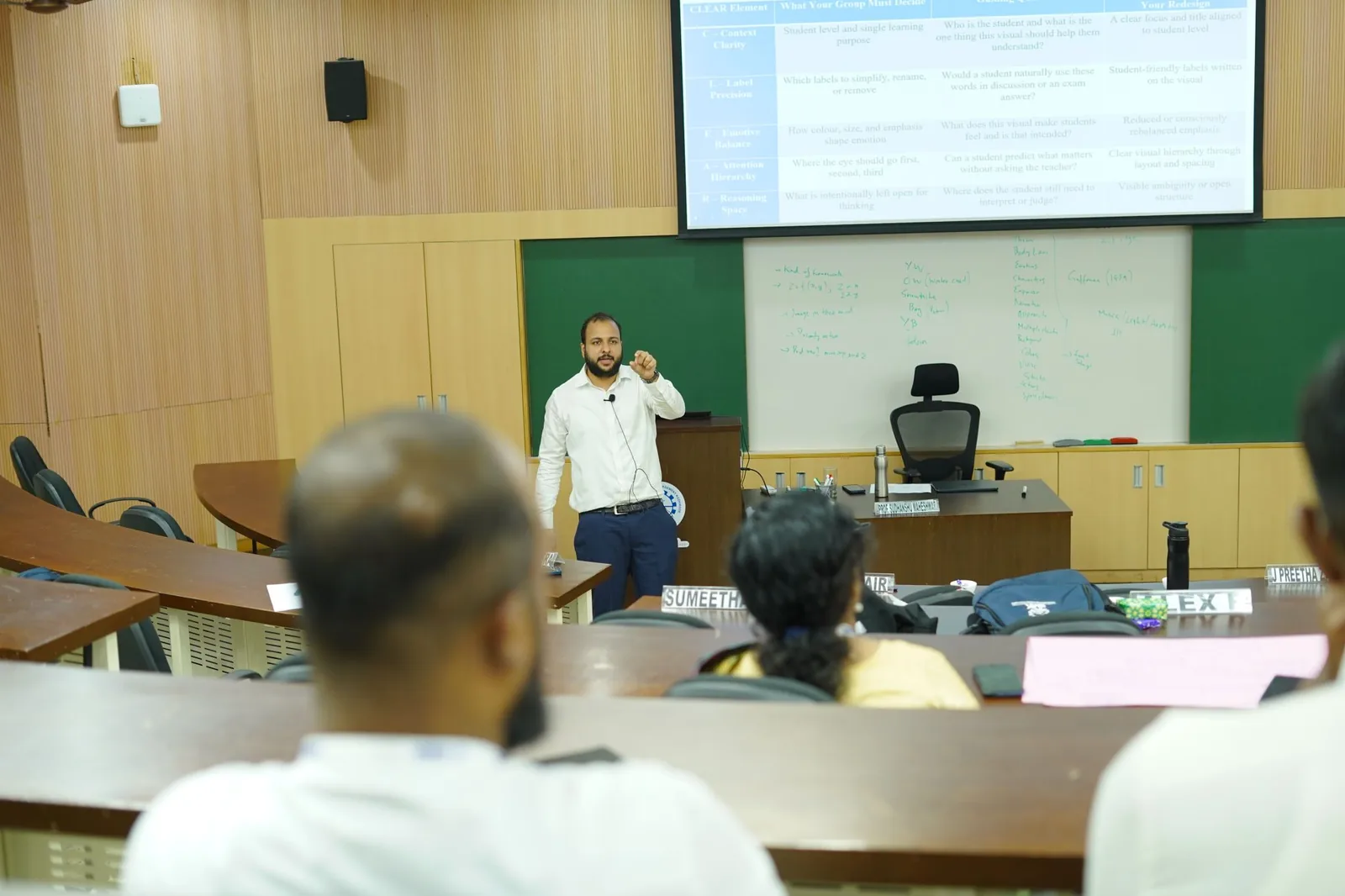
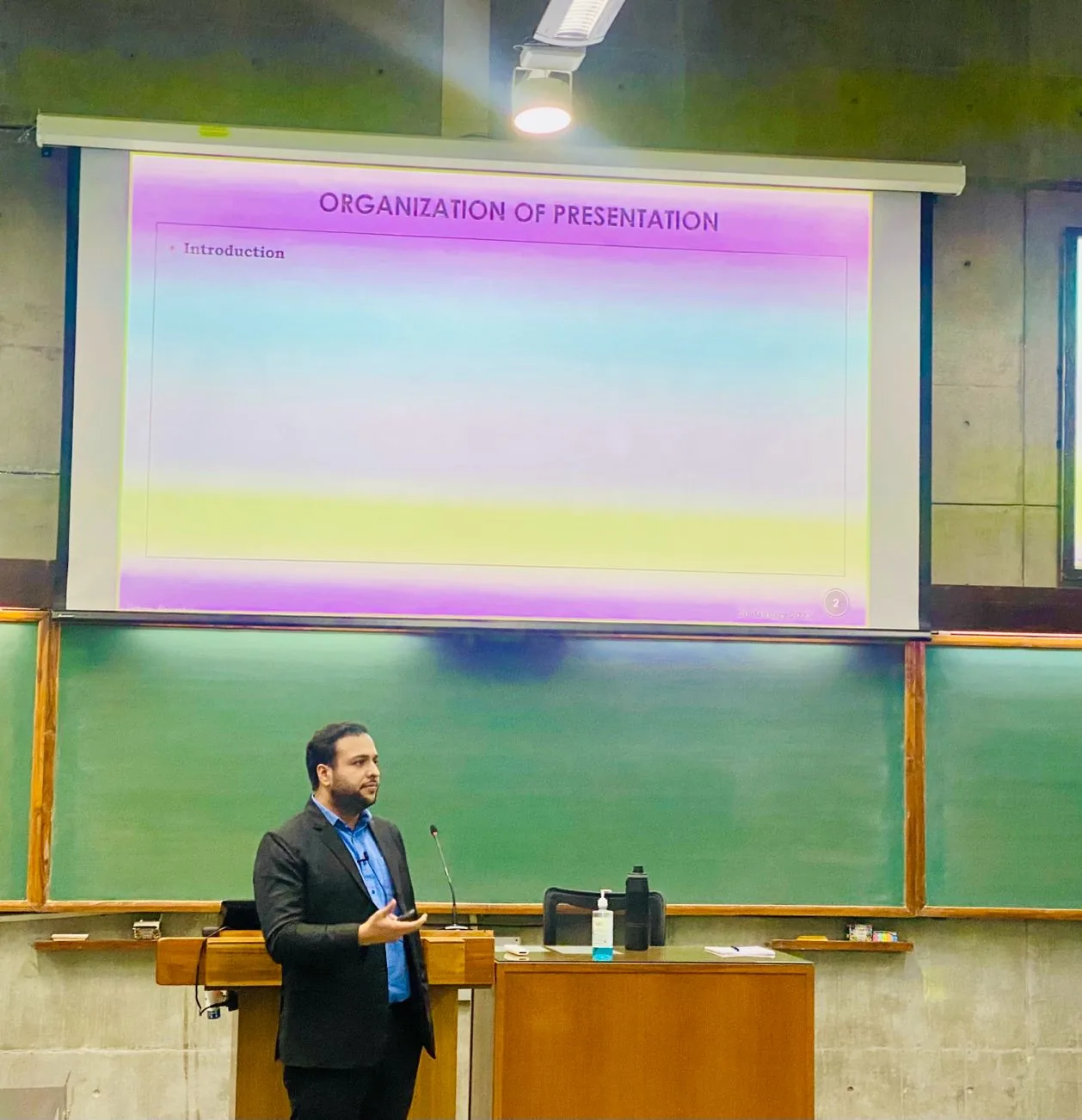
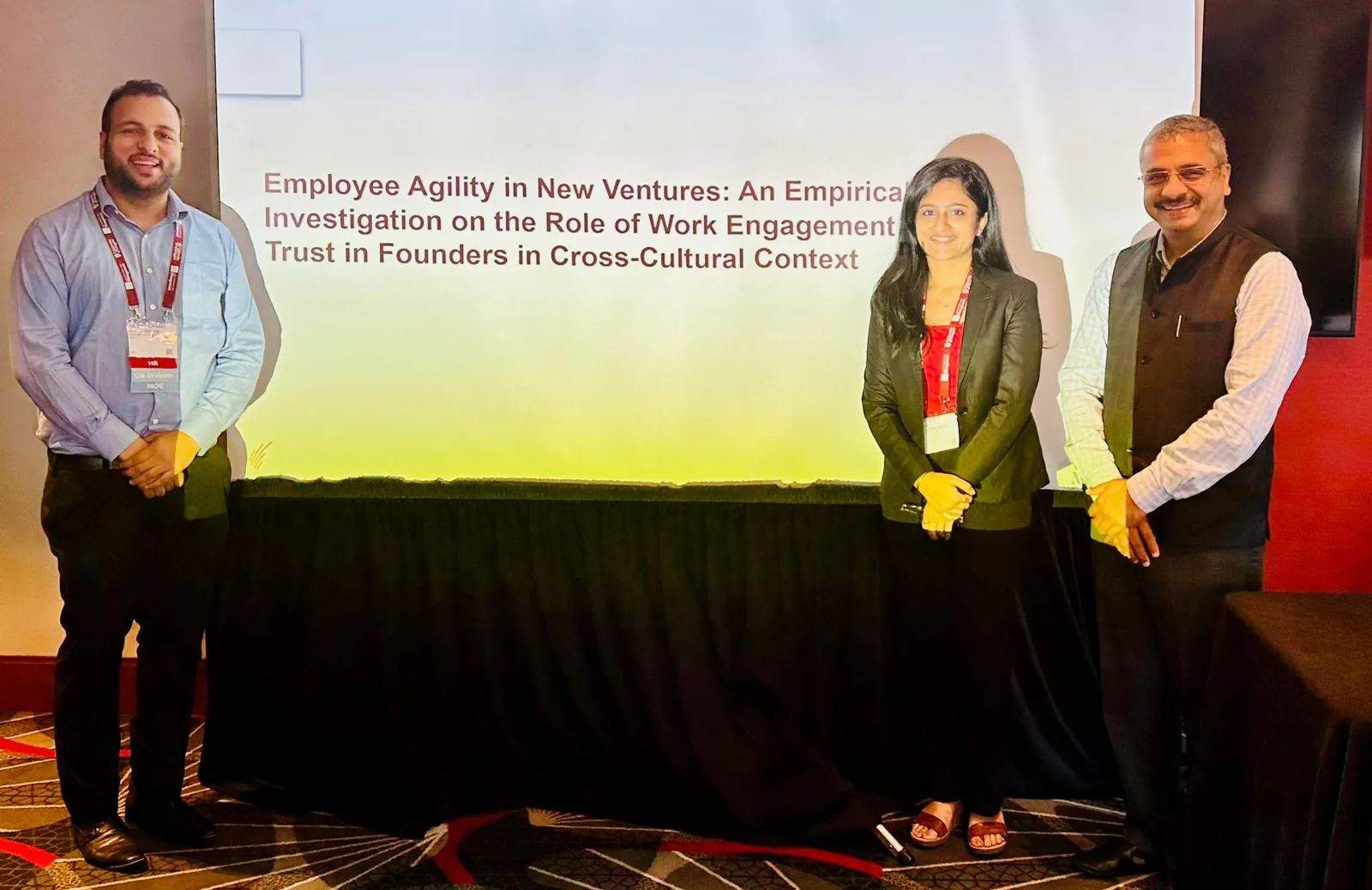
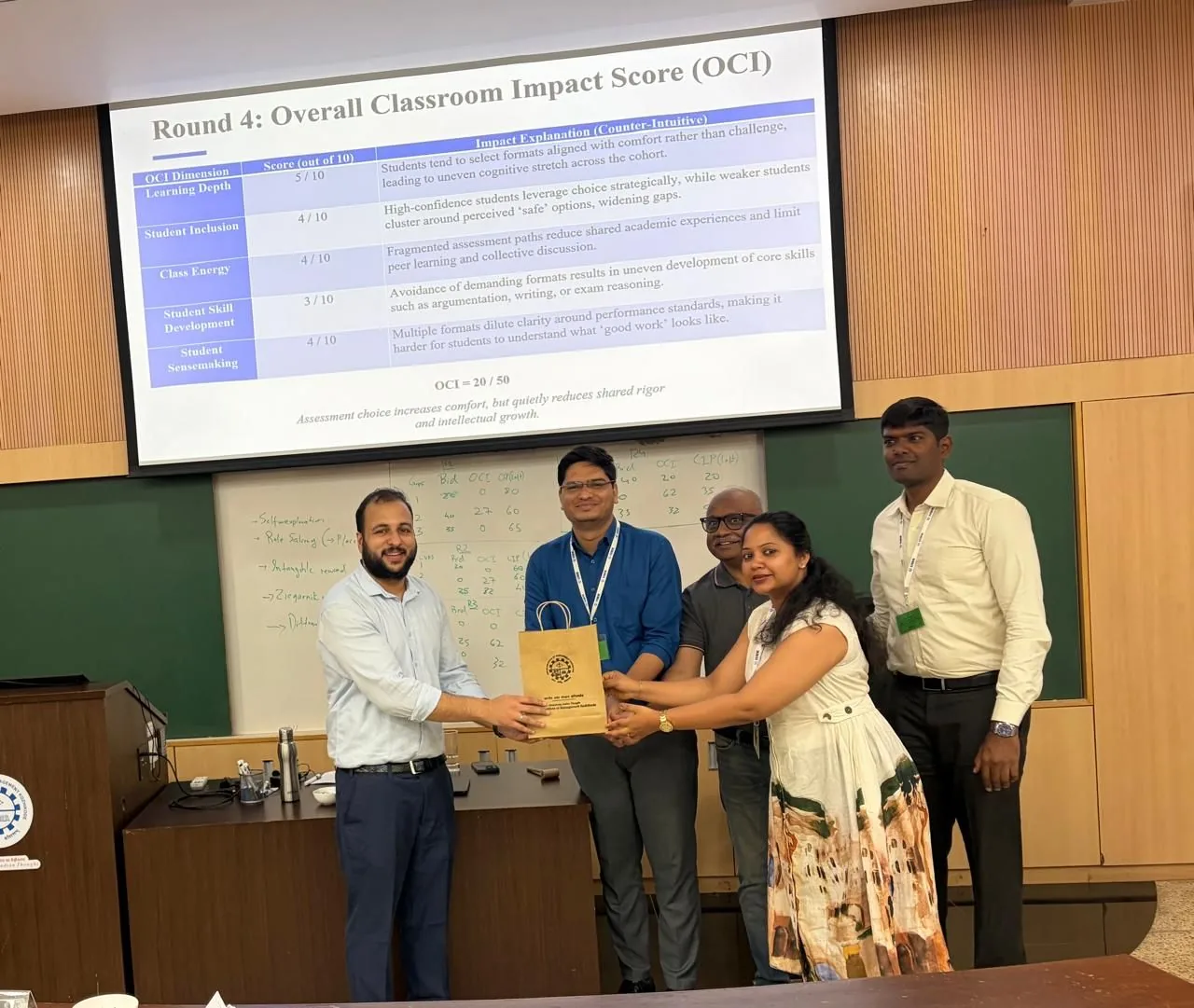
Three photographs, in the order the argument runs: where an idea gets tested, where it gets argued in front of people paid to disagree, and where it finally gets used.
Next step
If any of this sounds like your problem, say so.
Tell me what is happening: the decision, the room, the timing. We can work out from there whether it is advisory work, a programme, or a conversation you only need to have once.