Executive development
Leadership Programmes Designed Around Real Executive Challenges
Twenty-five executive programmes. Fifteen hundred senior leaders: CEOs, CXOs, Directors General, scientists, policy economists and high-potential managers. Each one designed around the decisions that particular cohort is facing, and each one scored by the people in the chairs.
Measured, not asserted
What the people in the room said.
1,500+
Senior executives engaged
Across public and private sector organizations
25+
Executive programmes
Designed and delivered across industries
4.8/5
Average participant rating
None below 4/5 across 2025-26 sessions
24+
Organizations served
Energy, government, banking and industry
Four ways in
Not a catalogue. A brief.
Every one of these started as a conversation about a business problem, not a request for a training module.
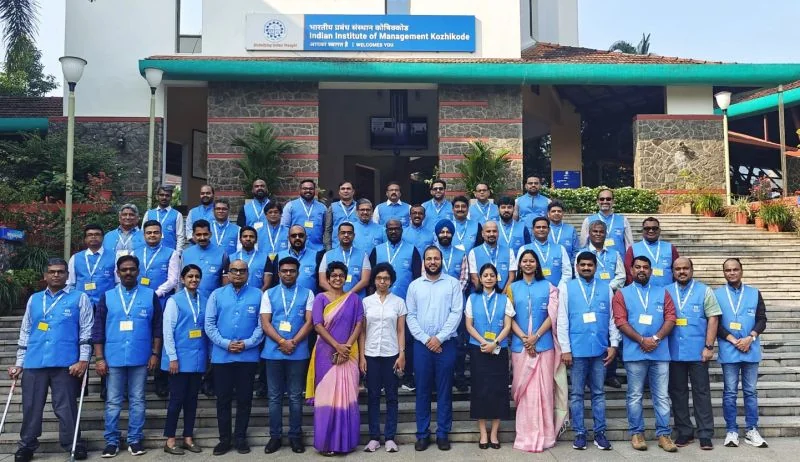
Leadership development programme
“Our next tier of leaders is not ready for the jobs above them.”
A multi-day programme for one leadership tier, built around the decisions that tier is about to inherit. Cohorts have run from thirteen people to a hundred and fifty.
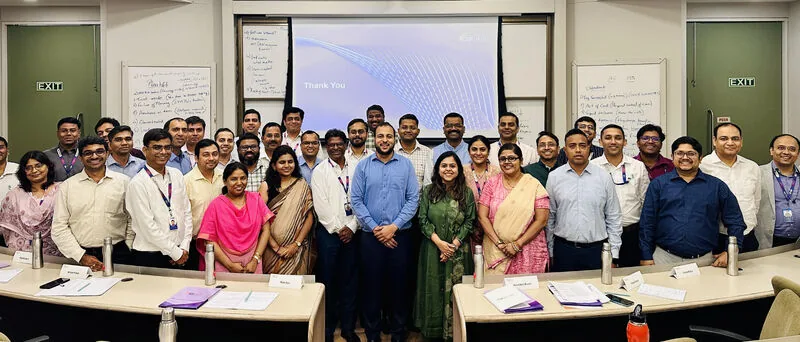
In-company workshop
“One thing is going wrong and everyone knows what it is.”
A focused intervention on a single problem: conflict, difficult conversations, emotional intelligence, negotiation. Two days, one room, one subject.
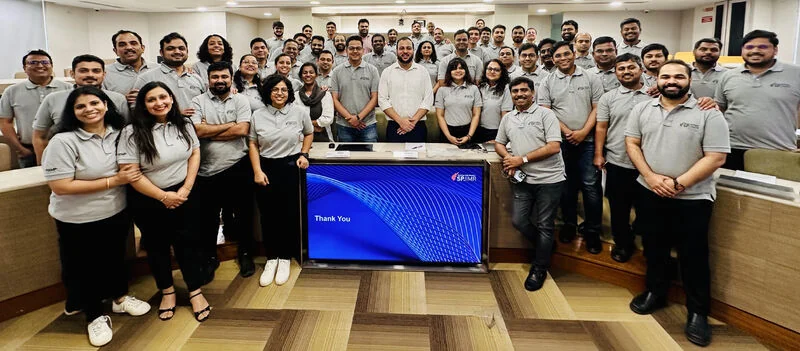
Public-sector and policy leadership
“Our officers are excellent technically and untrained as leaders.”
Programmes for government cadres, where the constraint is rarely capability and usually the machinery those leaders operate inside.
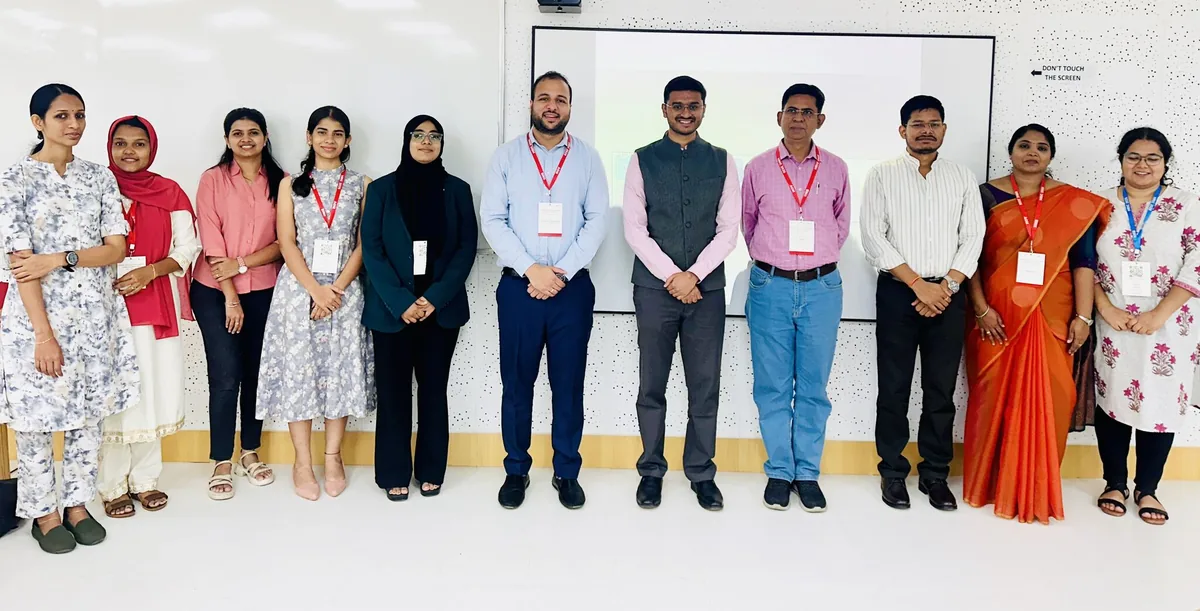
Women’s leadership
“We keep losing women between middle and senior management.”
Advanced modules on strategic negotiation, conflict management and growth mindset, informed by his own published research on the barriers to women’s careers in India.
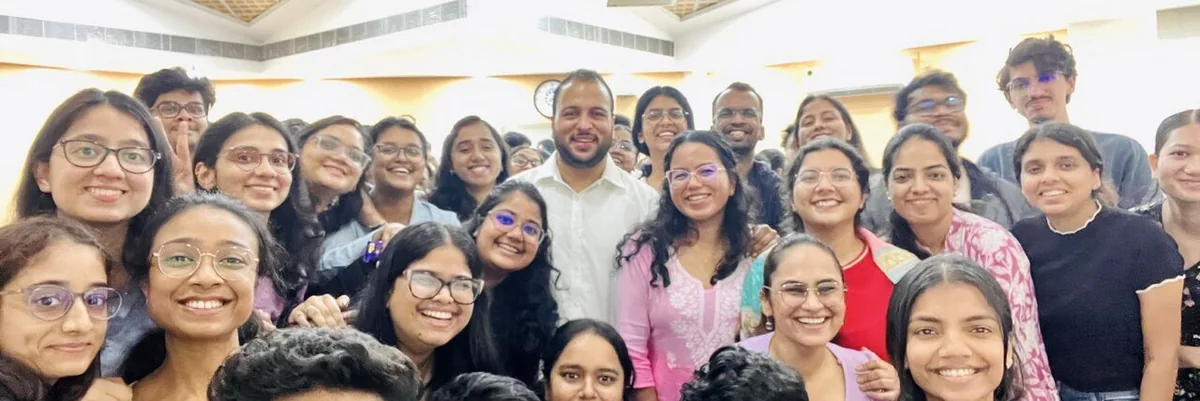
Organizations I have taught, advised and built programmes for

41 senior executives

Consulting client

Executive learning

28 senior leaders

13 senior executives

Business Excellence Programme
Senior Leaders Programme
Leadership development
Leadership development

Leadership development

Leadership development

Emotional intelligence

Mid-career programme

20 institution heads

Leadership development

Next Gen Finance Leader

Executive learning

Consulting client

Consulting client
Performance audit
Delivered
Every cohort, with the score it gave.
Participant ratings are each programme’s own end-of-session feedback. Cohort sizes and seniority are as recorded in the programme documentation.
Corporate
01
Leading for Growth & Excellence (LEDP)
Muthoot FinCorp · CEO, CTO, CBO and six other CXOs · 18–22 years’ experience
02
Senior Leadership Programme
TVS Mobility · a CFO and leaders across EV, sales and service · approximately 45+ average age
03
Conflict Resolution & Team Building
Petronet LNG
04
Business Excellence Programme
South Indian Bank
Government and public sector
05
MDP for Heads of Institutions
Ministry of AYUSH, Government of India · Advisers, Directors and Directors General · 25–30+ years’ experience
06
Emotional Intelligence
National Informatics Centre, Government of India · Scientist-F and Scientist-G officers
07
Mid-Career Training Programme
Indian Economic Service, Government of India · approximately 45–48 average age · 18–30+ years’ experience
08
Senior Leaders Programme
ONGC
09
Next Gen Finance Leader: Ideas, Influence and Impact
Institute of Chartered Accountants of India
10
Data Analytics Programme
ONGC executives
11
Thejaswini Women’s Leadership Programme
Bank of India · January 2026
12
Women Managers Programme
Department of Public Enterprises, Government of India · September 2025
Business school
13
CEO Programme, batches 02–04 (HRM)
IIM Kozhikode · CEOs, CXOs and senior business heads · 22 years’ average experience
14
EPGP: Performance & Talent Management
IIM Kozhikode · experienced executive participants
15
Women Leadership Programme (WLP)
IIM Kozhikode · high-potential and senior women leaders · 12–15 years’ experience
16
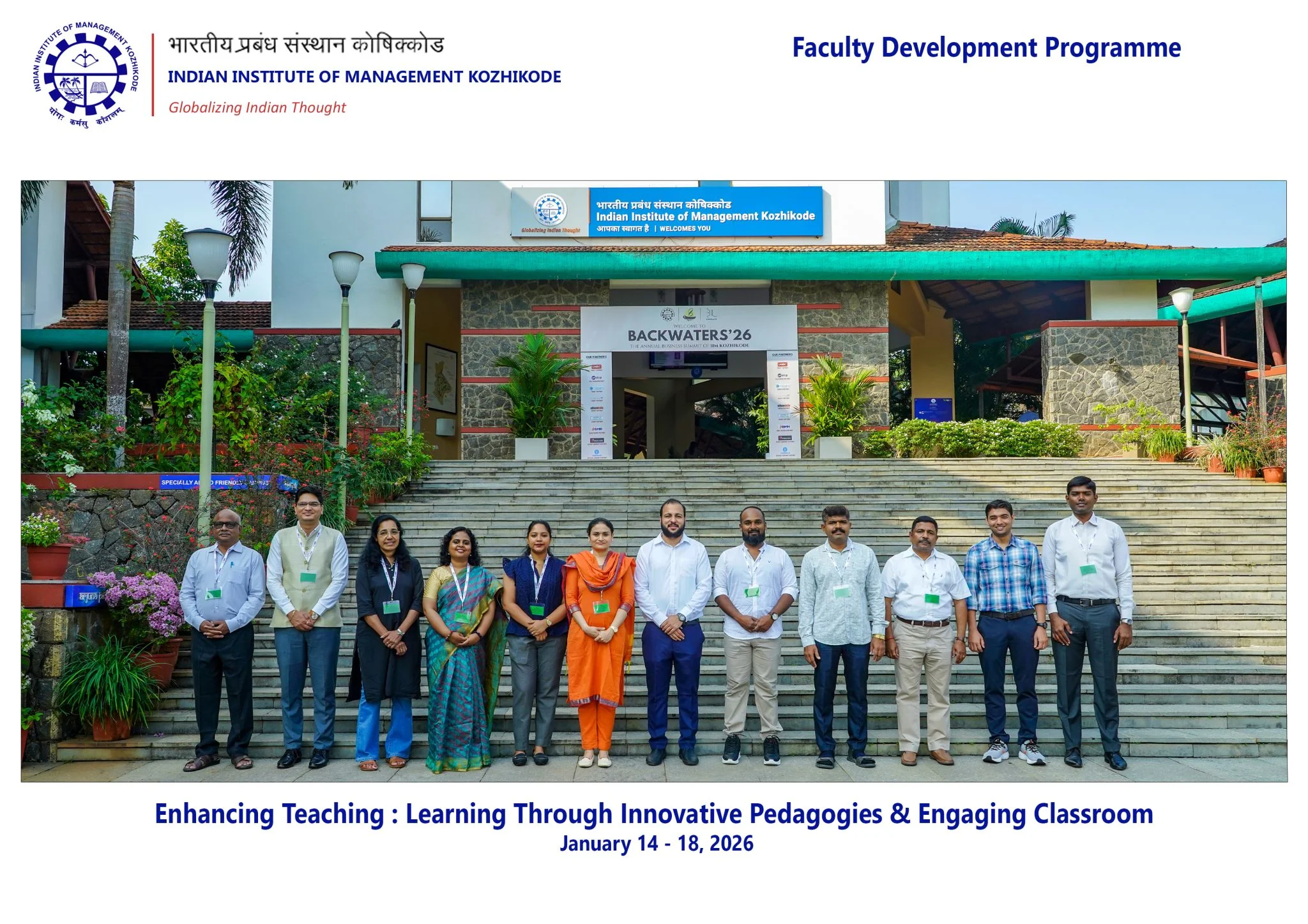
Enhancing Teaching: Learning Through Innovative Pedagogies and Engaging Classrooms
IIM Kozhikode · 14–18 January 2026 · faculty cohort
17
Human Resource Strategy
ASMP and the Certificate in Advanced Strategic Management
18
Leadership Lab
SPJIMR · mid-career and senior professionals
Method
The design work happens before the room does.
Four decisions keep the programme tied to the sponsor’s problem and the cohort’s level.
Diagnose
Find the actual constraint.
Interviews with the sponsor and a sample of the cohort before anything is written, because the brief and the problem are rarely the same document.
Design
Build for the decisions ahead.
Sessions built around the decisions that cohort actually faces. The CEO Programme ran on judgment and trade-offs rather than frameworks, because CEOs already have the frameworks.
Deliver
Work at the seniority of the room.
Facilitation at the seniority of the room. A CFO, a Director General and a Scientist-G will not sit through material written for a general audience.
Embed
Leave something the organization can keep.
What the organization keeps afterwards: the policy, the performance system, the manager who can now run it themselves.
Subjects
Four groups. Fourteen subjects.
Grouped by the problem they answer. Open any group to see the subjects and where they have been used.
Leadership and judgment
Leadership development and executive effectiveness · executive communication and influence · conflict resolution and difficult conversations · leadership coaching and talent development. These subjects have been taught to CEOs, CXOs, public-sector leaders and high-potential managers.
Strategy and the HR system
Strategic HRM · organizational change and transformation · business excellence and performance management · strategic sales and business leadership. The work ranges from CEO programmes to Business Excellence for South Indian Bank and Human Resource Strategy in advanced management programmes.
AI and the future of work
Human-AI collaboration and the future of work · healthcare management and AI applications. The material draws on published work on AI, employee privacy and trust, and on executive masterclasses in AI and talent acquisition.
Who is in the room
Public-sector leadership and governance · women’s leadership and career advancement · organizational behavior and people management · innovative pedagogies and faculty development. Cohorts include government officers, women leaders, experienced managers and faculty members.
In their words
Written after the programme ended.
Accounts from the people in the room, each tied to the programme or classroom where the work happened.
When I first learned that we had a subject called HR Research Methods, I thought, okay… this is going to be a lot of explanations, derivations and theories. 😅 But Sudhanshu Sir gave it a completely different perspective.
The way he showed us how to actually identify a problem statement, approach a case and think about it from a practical HR perspective was genuinely fascinating.
And with the group case presentations, discussions, and even acting out the cases in class - the concepts didn’t just stay on paper. We actually experienced them. ✨
Definitely one of those subjects that changed the way I look at research.
Sudhanshu was a professor at SPJIMR for the Leadership LAB, where I witnessed his profound expertise in combining behavioral science with strategic leadership principles. His method of explaining complex concepts was highly impactful and easy to grasp.
I have also sought his guidance on various other matters, and his advice has always been insightful and sincere. His ability to mentor individuals in transforming leadership into a strategic business driver makes him an exceptional mentor for anyone looking to elevate their leadership skills and drive organizational success.

I had the opportunity to attend Prof. Sudhanshu Maheshwari's engaging and insightful session on Strategic Negotiations during our IIM Kozhikode Women Leadership programme. The way he explained BATNA and ZOPA concepts was extremely clear and practical, helping me realise how to harness the power of negotiation in real scenarios.
While it's not a skill one can master overnight, his session made me more conscious of ensuring that I am neither undervalued nor overlooked, and that I can confidently articulate and protect the value I bring to the table.
I particularly appreciated how he kept the discussions light, relatable, and rooted in real-world applicability. The blend of theory and interactive conversation made the learning both memorable and impactful.

Having depth of knowledge but using that knowledge for the benefits of others needs great skills — Professor Sudhanshu is well versed with impeccable skills of using vast knowledge for the benefit of others.
I had an opportunity to interact with him during IIMK course. I was impressed how easily Professor handled critical topics like organizational behaviour, culture, how to handle conflicts, team collaboration, reflection and so on.
I strongly recommend Professor Sudhanshu to organizations who are going through tough times in handling organizational behaviour or culture issues, or want to set up ideal SOPs.

I had the chance to attend Prof. Sudhanshu's classes during my Executive Business Management program, and I genuinely admire him. He has an incredible knack for spotting potential in people and bringing out the best in them.
His sessions were never just lectures — they were lively, interactive conversations filled with real-life examples and thought-provoking questions. The depth of his knowledge and the way he made learning engaging left a lasting impact on me.

It was really a mind opening session I had with Mr. Sudhanshu. His in depth knowledge and command on the subject is mind blowing, which is really based on the real world activities happening in today's life.
Being a scholar on various subjects in his academics, he binds all the participants in an active session — active participation, full engagement, open discussion, ideas generation, and narrating the case studies — converting the whole class to learn the reality as a lifetime lesson for everyone, by allowing each member to put forward their real experience into ease of learning.
Thank you for guiding me through the subject of Effective Hiring, Compensation, and Reward Management. The course has been a truly insightful and enriching journey for me. Previously, I believed that most decisions in this area relied largely on intuition based on my past professional experience. However, after attending your sessions, I have realized the critical importance of making data-driven decisions instead.
One profound lesson I gained is that technology serves as an enabler, but it is humans who harness its potential to enhance lives. This has reinforced my understanding that human capital is the most essential resource for any leader — managing and developing it is key to building a motivated team capable of achieving organizational success.
If I apply metrics rigorously across hiring, compensation, and reward processes — making data-driven rationality my foundation of decision making — I am confident that I will become a respected leader in the future.
I wanted to thank you for the four sessions on HR Management that you took for our batch. Recently, while preparing for our capstone project, I revisited your lectures and found them extremely insightful.
The way you conducted the sessions — making them engaging, fun and interactive — made a huge difference. The matrices you shared for each topic were also very interesting and helped simplify the concepts beautifully.
We are currently restructuring our company and I was responsible for non-technical hiring. You took a lecture on recruitment and although the exact points were not directly applicable to my situation, the clarity I gained from your session made the entire process much easier. It also gave me the confidence that I was making the right decisions.
I am truly grateful for your teaching, and I think everyone in the batch would agree that you are our favourite professor so far.
Thanks a lot for your contribution in explaining not only the subject in detail but multiple dependent and independent references, stories and incidents.
Personally the concepts, references and experiences shared by you really helped me be a balanced person both in professional and personal life. I will practise class learning to develop a great leader within me.
Thank you for making the Leadership Lab so interesting and exciting. It was really an enjoyable journey we walked together. Your knowledge in various kinds of topics, from History to Cricket, is very much appreciable.
It would be an absolute privilege for me if we can sit together to discuss a few ideas, history, cricket or maybe human psychology over a cup of tea during our next meeting. Please keep teaching with your smiling face, wittiness, and last but not the least quoting Faiz Md. Faiz.
Indeed it was one of my eye opening kind of lectures. I personally learned a lot and there is so much to practice. I will reach out in case anything comes up while implementing the concepts you taught us.
Really loved and enjoyed the journey of these sessions of Leadership Lab. Admired by your passion and knowledge. I have saved your number and am going to disturb you in the future when I need support.
It was a very enriching learning experience, Prof! Thanks a ton for being so patient, cheerful and energetic. Looking forward to implementing these — will keep you posted on the developments.
It was indeed a very dynamic experience for us as well. Though it was a very short span of time, we got to know insights which we will recollect in our day to day professional and personal interaction.
It was a great and memorable experience to attend your class. The techniques are excellent, to say the least. I feel it will always be echoed in my memory.
It was an amazing experience to learn about research methodology. The activities were really interesting and different to what some of us had experienced earlier. Having said that, this also helped us as a team to work together in such a short span of time.
Why the material holds
Taught from research, not from slides bought in.
Ten peer-reviewed papers, five in ABDC-A journals, and a teaching case other business schools teach from. The programmes draw on all of it.
Fairness, well-being and what it costs
Published work on unfairness, loneliness and knowledge hiding: the material behind the conflict and difficult-conversations modules.
AI at work, and where trust breaks
Watch out, you are live! in Communications of the AIS, plus four Academy of Management papers on AI and employee privacy.
A case other schools teach from
AMRG & Associates: Crafting Professionalization Through HR Transformation, first-authored, in the Journal of Organizational Behavior Education.
Next step
Start with the problem, not the curriculum.
Tell me what the cohort is facing and who is in it. The programme design follows from that.